About
On the clock
I run 8020. We design and build websites for two kinds of clients — startups and enterprise companies on one side, and creators, artists, and podcasters on the other. Over the years, I've been very fortunate to work with companies and creators like Warner Bros, Vanta, Pilot.com, Dr. Andrew Huberman, David Senra, Rick Rubin, Hasan Minhaj, Chance the Rapper, and 100+ more (crazy enough: our average client is worth more than $1 billion.)
I started my first agency, Websterpeace, during my senior year of high school, working on it from the computer lab during lunch (mostly out of a desperation to not follow my parents' plan for me to become a doctor, lawyer, or engineer.) I built a simple website on Weebly, sprinkled in a lot of "we" and "the team" to offset the fact that I was a seventeen-year-old and not a company, and got to work.
I went to the University of Oklahoma and studied engineering for three years (I couldn't avoid it.) Balancing school with trying to land clients eventually got the better of me, so I switched to finance to make my life a little easier.
I ran Websterpeace all the way through college, constantly leaving campus to take meetings in Oklahoma City, and after about five years I sold it to Tiny, a family office in Victoria, British Columbia that has since gone public. As part of the deal, they asked me to take over 8020, a company that was about six months old at the time. I asked barely any questions (I certainly should have asked much, much more.) But foolish or not, I said yes. I was 21, suddenly running a business in a country I'd never been to, with one employee, no technical team, and no real idea how far we could take it.
Admittedly, the early years with 8020 were not easy ones. I really struggled as a leader, and the company struggled right along with me. For the first couple of years it was a small, stressful business, and most months felt like boom or bust. Some months were amazing and left me feeling like I had it all figured out, and some months made me wonder whether I should be running anything at all.
Over the years, I made a lot of important changes to the company — narrowing what we offered from full-service down to just websites, hiring a COO (Joanie, who would later go on to become my wonderful business partner), and ruthlessly focusing on building an agency centered around hospitality. I'm a big believer that almost every service business, and especially every agency, is in the hospitality business — they just might not know it yet. The work itself is table stakes, and people expect you to have that dialed no matter what. But the service, the experience, the communication, all of those soft skills, were only getting more important in a world that was getting more disconnected and less friendly.
As 8020 found its footing and place in the market, it also became clear that a small agency and a publicly traded portfolio that needs to satisfy analysts are built to want different things. Joanie and I were the ones who cared most about where the company went next, and we wanted the say to match — decisions made by the people inside the business, not by boards, bankers, or consultants who only ever see it as a spreadsheet.
In 2024, after a year of negotiation with Tiny, Joanie and I bought out the other shareholders — 8020 was officially ours. By some combination of sheer luck, a lot of hard work, and some truly wonderful team members, it has become an incredible business since then: about 25 people full-time across 10 countries, a valuation that has grown roughly 8x in two years, and clients that include some of the biggest companies, celebrities, and creators in the world. We're profitable, healthy, stable, and calm (and best of all, there are no pesky boards.) It's a company I am very proud to call mine.
Off the clock
These days, you'll find me in Oklahoma City, the greatest city in the world.
At a dinner recently, someone asked the table what we wanted to be becoming, and my answer came out before I could think about it: more present. I've felt too online for years — social media, short-form video, the constant task switching that comes with running a company — and I could feel my attention span shrinking, and the quality of my days shrinking with it. AI has only made that harder to fix, because it has made me more capable than ever of building things and learning things, and every one of them happens on a screen.
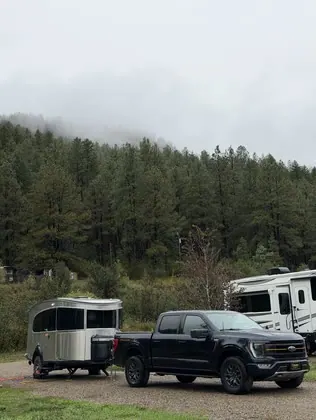
The people I know who seem the most content are the ones with the least screen time and the most community, and last year, I finally took the hint (or at least, I'm attempting to.) My first trip to a national park, Yellowstone, was a huge turning point for me. Two weeks after I got home, I bought a travel trailer, hooked it up to my truck, and never looked back. It's been great getting off the beaten path with my dog, and I hope to take it all over the US and Canada.

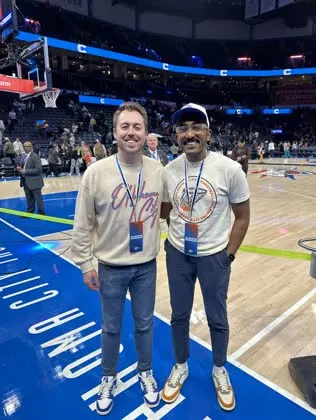
My plan for 2027 and beyond is to bring my best, most focused energy to 8020 every day, and (the part I struggle with most) to actually be off when I'm off — in an airplane, where I'm working toward my Commercial Pilot's License, on a motorcycle (off-road or on!), in the stands rooting for the Oklahoma City Thunder (the greatest NBA team in the world), or clunkily learning Spanish. I'd like to be where my feet are, every single day.


Matt's Rules for Life
- Send cold emails. They will fundamentally change your life. (It's perhaps the best rule on this list.)
- Showing up in person does not scale, and it works better than anything that does.
- I'll never trust a person who can't talk about their losses.
- Learn to fly. That a person can do it at all is one of the most unbelievable things in the world.
- Always choose the window seat. The view from 37,000 feet deserves a look every single time.
- Red-eye flights are for young people, and you should avoid them at all costs.
- Never buy a new car — someone else can eat the depreciation.
- Die with zero. Money you never spend on a life is a life you never had.
- Bring the dog.
- It's okay to change your mind about what you want in life, even if it's something big. People change.
- For every rule, there is always an exception.