How to Cold Email Your Dream Clients
People ask me about cold email all the time, more than anything else I do. So this is everything I know about it, in one place: the two emails that changed my career, and the exact process I still use to reach the people on my dream clients list.
"Send cold emails" is the first rule on my About page, and I put it there because cold email has fundamentally changed my life. Pretty much every big turn in my career traces back to an email I sent to someone who had no reason to answer it.
The backstory
Why cold email works
It's kind of crazy how easy it is to reach people by email. Most addresses are pretty guessable, and people check their inbox almost as much as their texts — and the bigger the name, the more true that is. In my experience, even people with teams or assistants to help with email often don't hand it off completely, sometimes for privacy reasons, so they still check it themselves. And even when an assistant does have access, most of them still look at their own inbox. There are obvious exceptions for the very biggest names in the world, like Taylor Swift, LeBron James, or Oprah.
There's also a strange social contract around it. I'd feel weird texting someone whose number I didn't already have (do NOT do this for cold outreach), but nobody thinks twice about a stranger showing up in their inbox. Cold email is one of the only places where reaching out to someone you've never met is completely normal, and I think more people should take advantage of that.
The two emails that changed my career
Chance the Rapper
The first cold email that really changed things for me went to Chance the Rapper's manager, and it didn't start with a website at all.
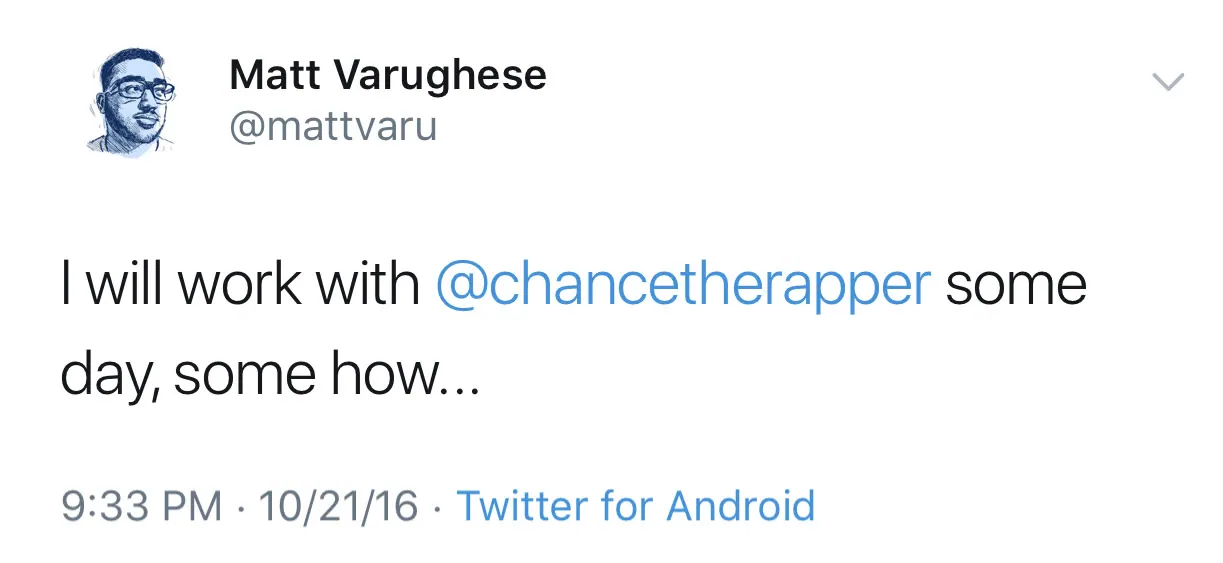
In October 2016, I tweeted that I would work with Chance "some day, some how." I had no connection to him and no way in. Around that time, he came through Oklahoma City on tour, and I went to the show. Snapchat had just launched geofilters, and they were so new that nobody knew how to price them yet — it cost me about $5 a night to put one up at a venue, and a single filter could get a hundred thousand views or more.
So I designed some very crude illustrations of Chance (I really hope no copies of those exist anywhere on the internet!) and paid for a geofilter at every stop on the tour. All in, I spent about $1,000 of my own money (which at the time was honestly a lot for me.) Along the way, I emailed his manager to tell him what I was doing, that I'd keep him posted, and that I wanted to be part of the team. His team wrote back right away. They were super nice, and they basically wanted to know what my deal was and who I even was. We traded a few emails back and forth.
Then the tour ended, and I was honestly pretty bummed that I hadn't been able to make something work with Chance. A while later, I was on a layover when his manager posted an Instagram story saying he had a wine brand and needed someone to build a Squarespace site. I replied immediately. He said, "I thought you did Snapchat filters." I told him that wasn't actually what I do — I build websites, and at the time, I was building exclusively in Squarespace. I built the winery's website, and that was the door.
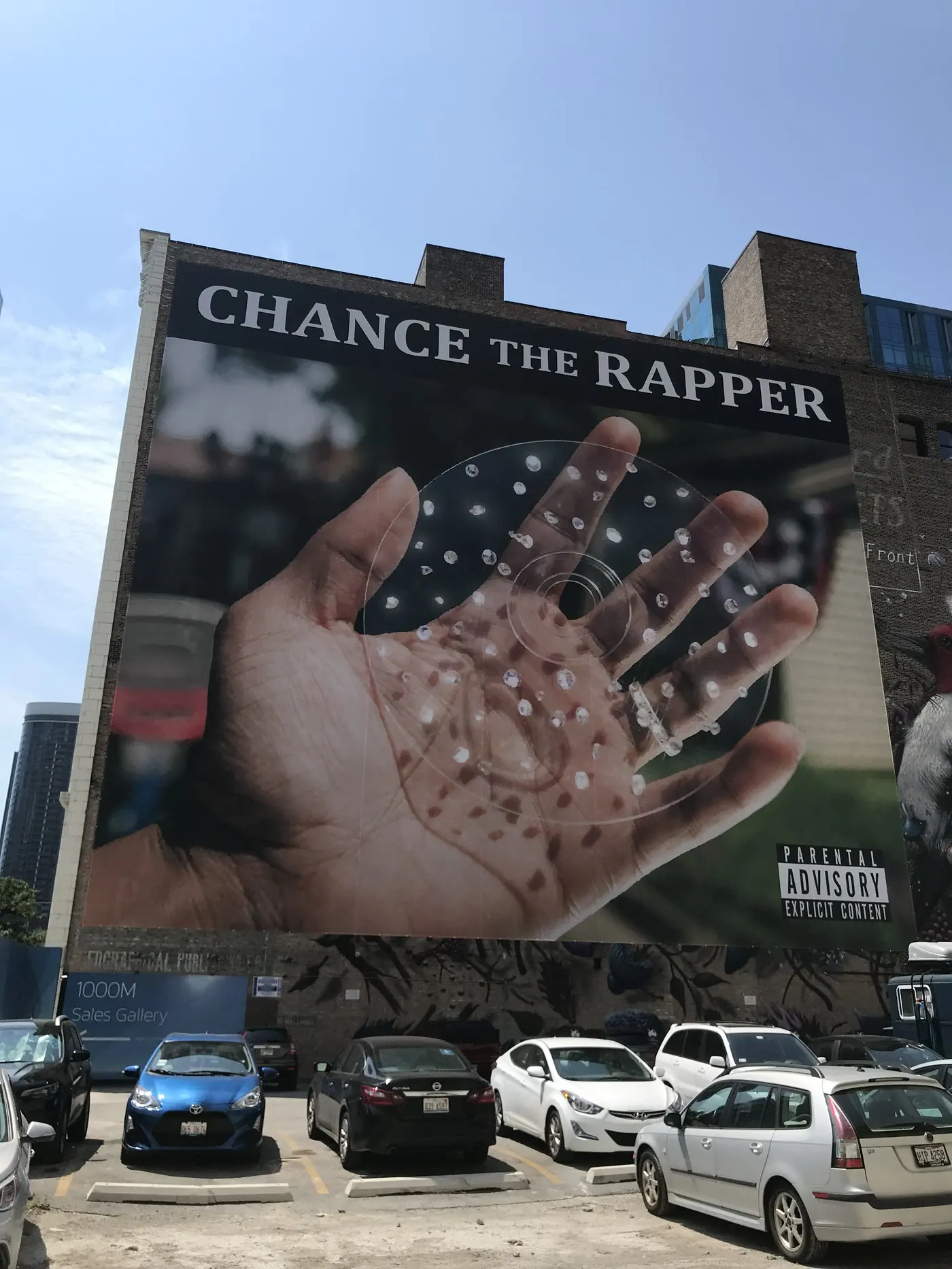
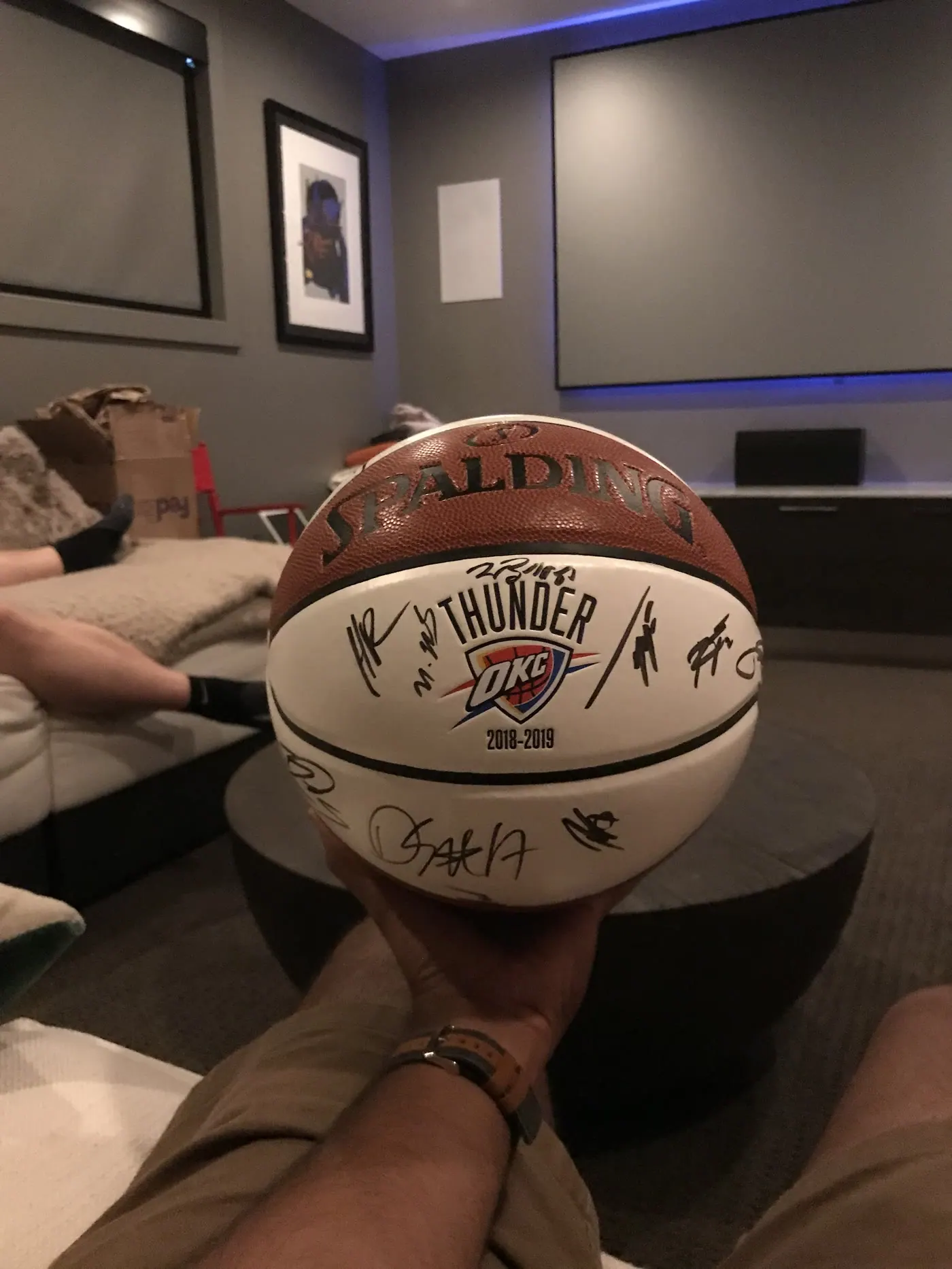
It opened at a big moment for Chance. He'd just gotten clearance to put his old mixtapes on streaming services, and he had struck a corporate brand deal with Squarespace, who was custom building his new website. It was important that what they built was really his vision, and that wasn't coming through on calls, so his team asked me to be the liaison between Chance and Squarespace. When Squarespace said an idea couldn't be done, like a Konami code that would apply a discount if you typed the right keystrokes on the site, I'd mock it up with a JavaScript library to show them it could. At first, I wasn't building anything. I was just helping bring his vision to life, and I was grateful they'd asked.
From there, the engagement very quickly expanded into helping with pretty much all things web. I worked on the site alongside the Squarespace team, and then I built his e-commerce infrastructure — things like making sure that when you bought an Acid Rap hoodie and we sent you a copy of Acid Rap with it, it still counted as an album sale. My friend Ben Parker (now Director of Solutions Architects at Webflow, and my personal intro to the Webflow world!) and I also built a microsite called Rapper Radio, which made it easy for fans to tweet at their local radio stations to get independent music on air. (I honestly owe Ben my entire career, and I don't deserve all the credit for that one.) It's also how I ended up on the other end of Jimmy Fallon buying Chance's debut album live on The Tonight Show, on the site I'd been helping build.

The filters were basically the scrappy first version of what I still do now, which is to make something for someone before they ever ask for it.
Hasan Minhaj
A few years ago, I looked at Hasan Minhaj's website and thought it could be so much better than it was, so I redesigned and rebuilt it on my own time and emailed it to him. I was so proud of that site that when my own team saw it, they asked who designed it. When I said it was me, they laughed, because I'm not a designer, and the website was somehow... good? (I think that's the power of being passionate about what you design, but I digress.)
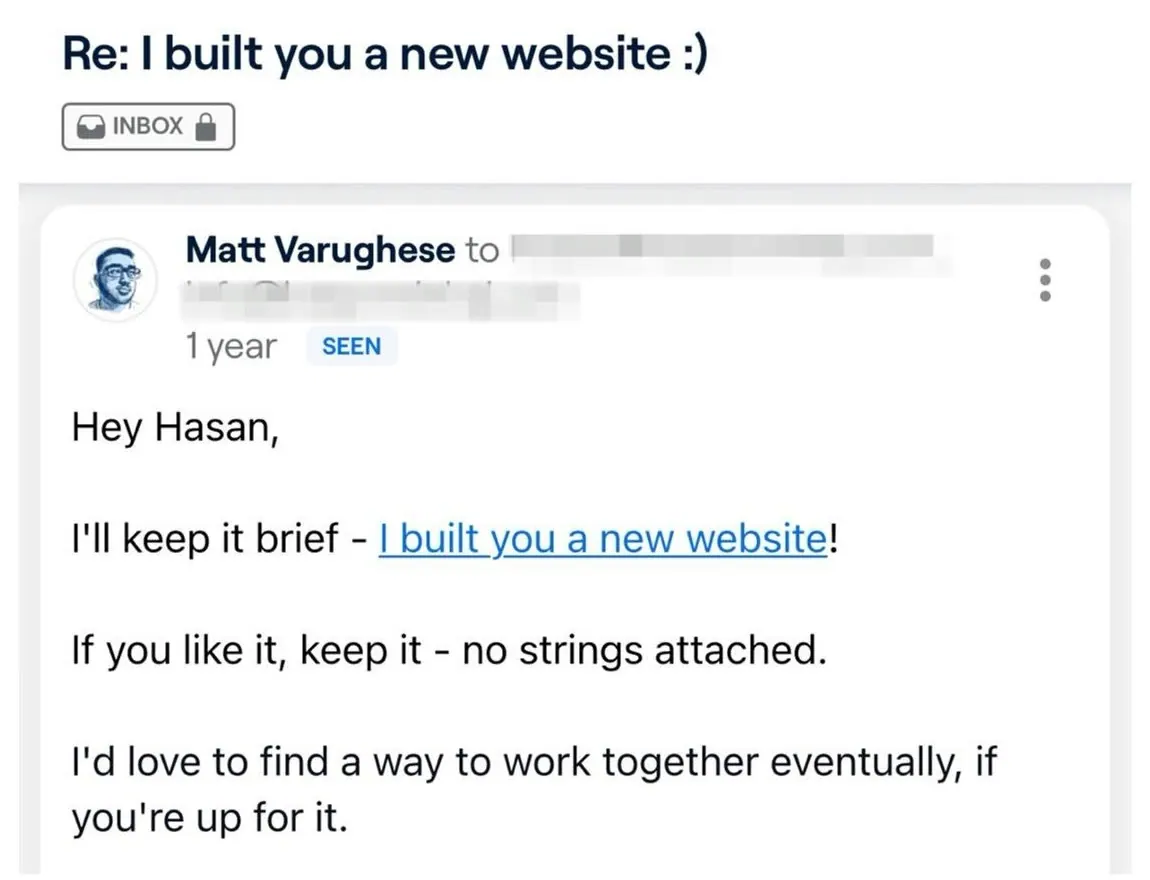
Here's a blurb of the email I sent him, and generally speaking, I don't think cold emails should be much longer than this.
He wrote back and said he didn't have an opportunity for me right then, but that it was super cool and he appreciated it. But just a week later, he had one. He was pitching a new movie, and we built a website to help sell it to the studios. He wanted to do away with the usual PowerPoint deck and have something more engaging to share with studio executives when he walked into the room. That pitch eventually became Best of the Best (it came out on Netflix this September and climbed to No. 2 on Netflix's global top 10 for English films, with 7.3 million views in its second week alone!)
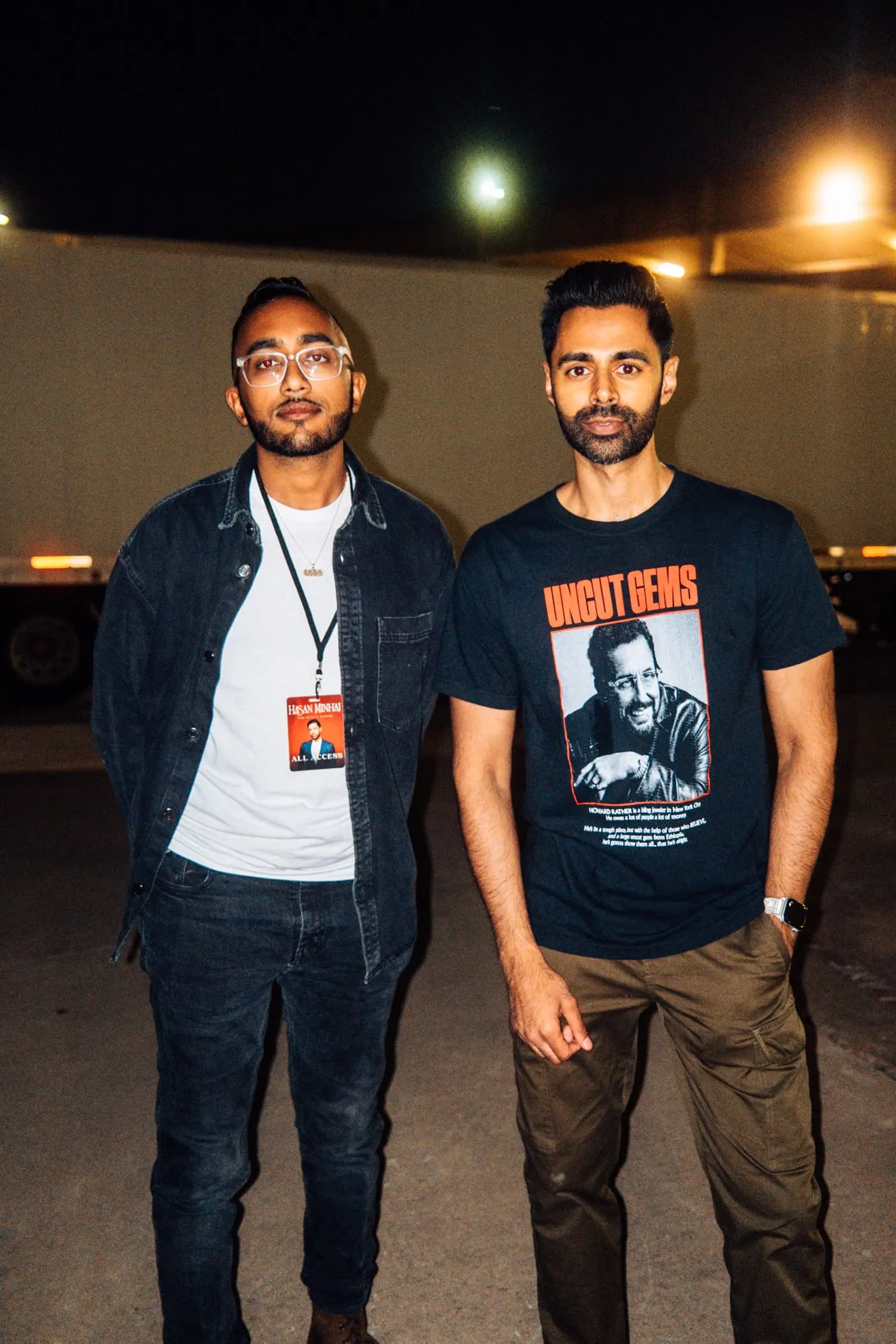
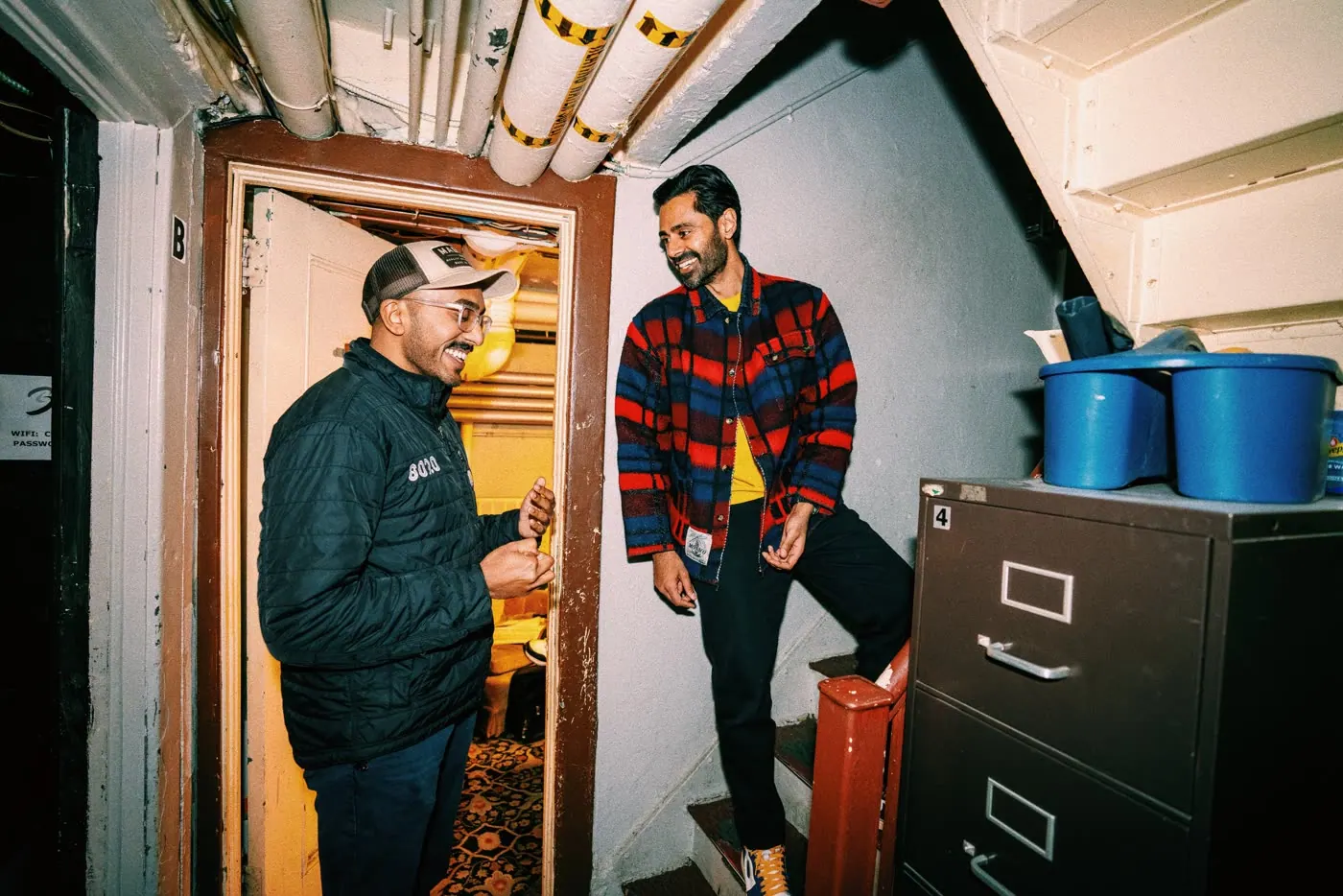
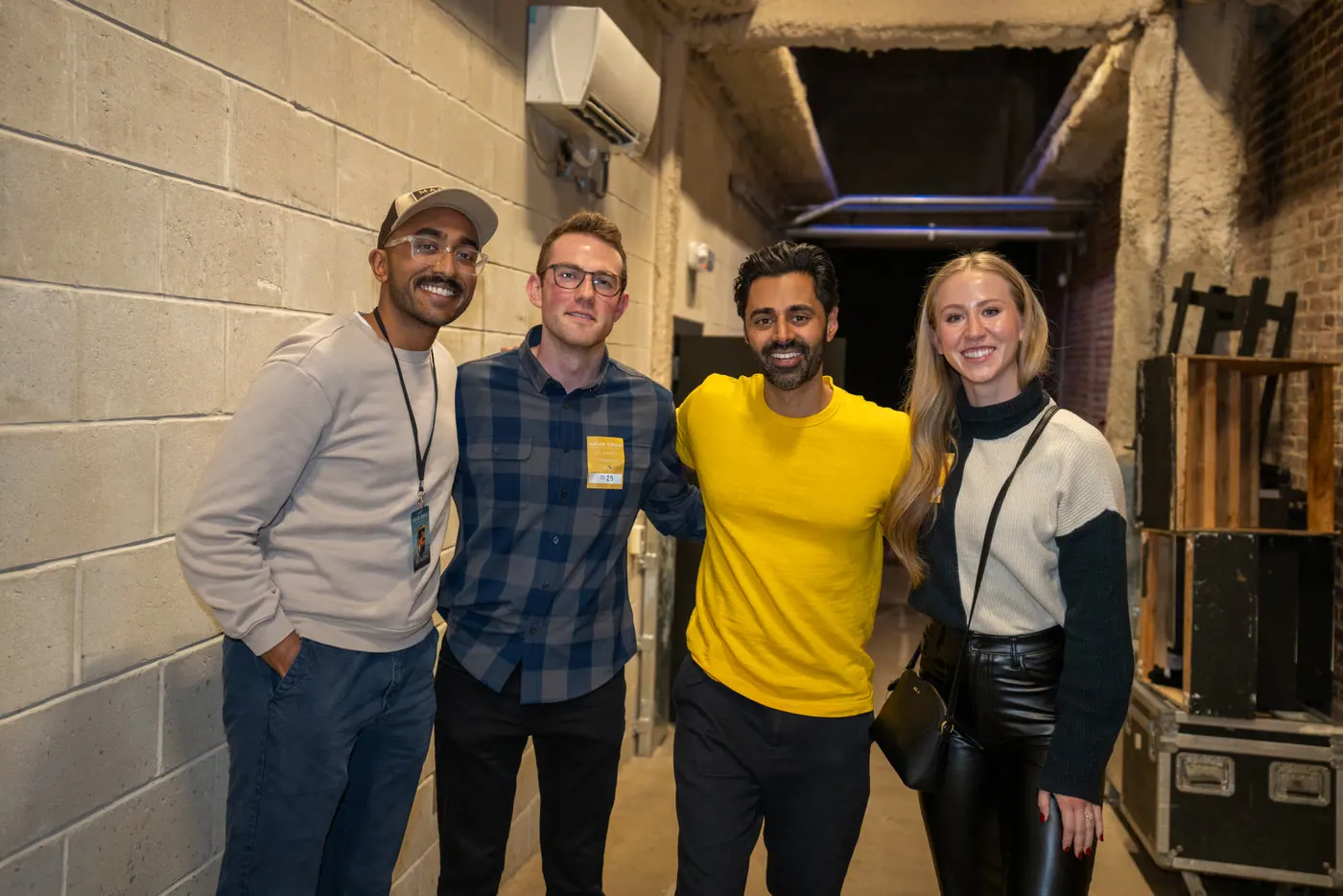
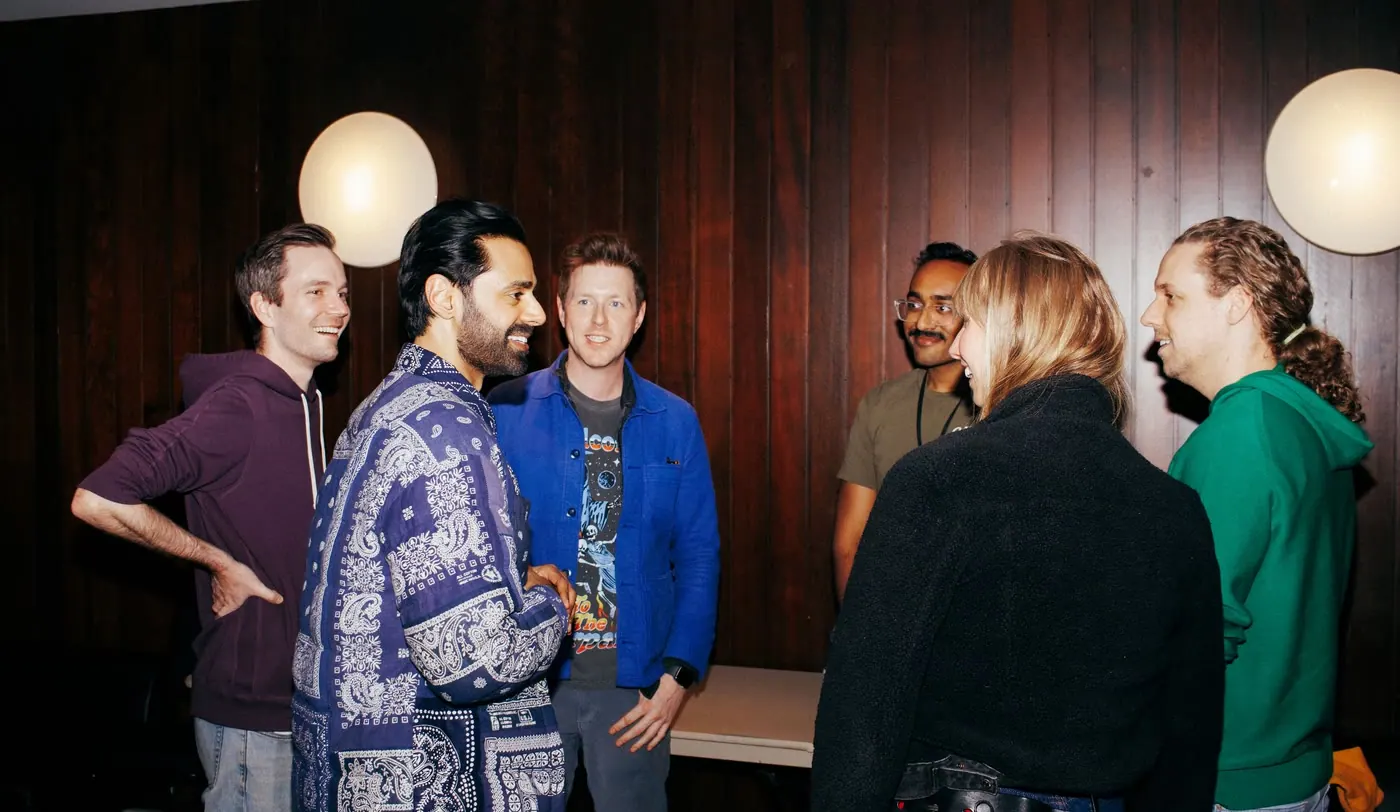
Hasan was very kind about it and adamant about paying me for my time, and he tried to pay me more than once. But I proposed something else instead. He had a show coming up in Dallas, so I asked if, instead of paying me, he'd get me tickets to the show, and we'd call it good. They said yes, so I went, and we all went to dinner after the show.
In the car that night on the way to dinner, Hasan told me what had made my email stand out. He gets a ton of messages every day with meaningless things like "let's link" or "let's collab," and he can never tell what the person actually does or what they'd even make together. Mine said exactly who I was and what I do, and then it showed him, already finished, with no work in progress to imagine and no portfolio to dig through. It was right there, and he could just have it.
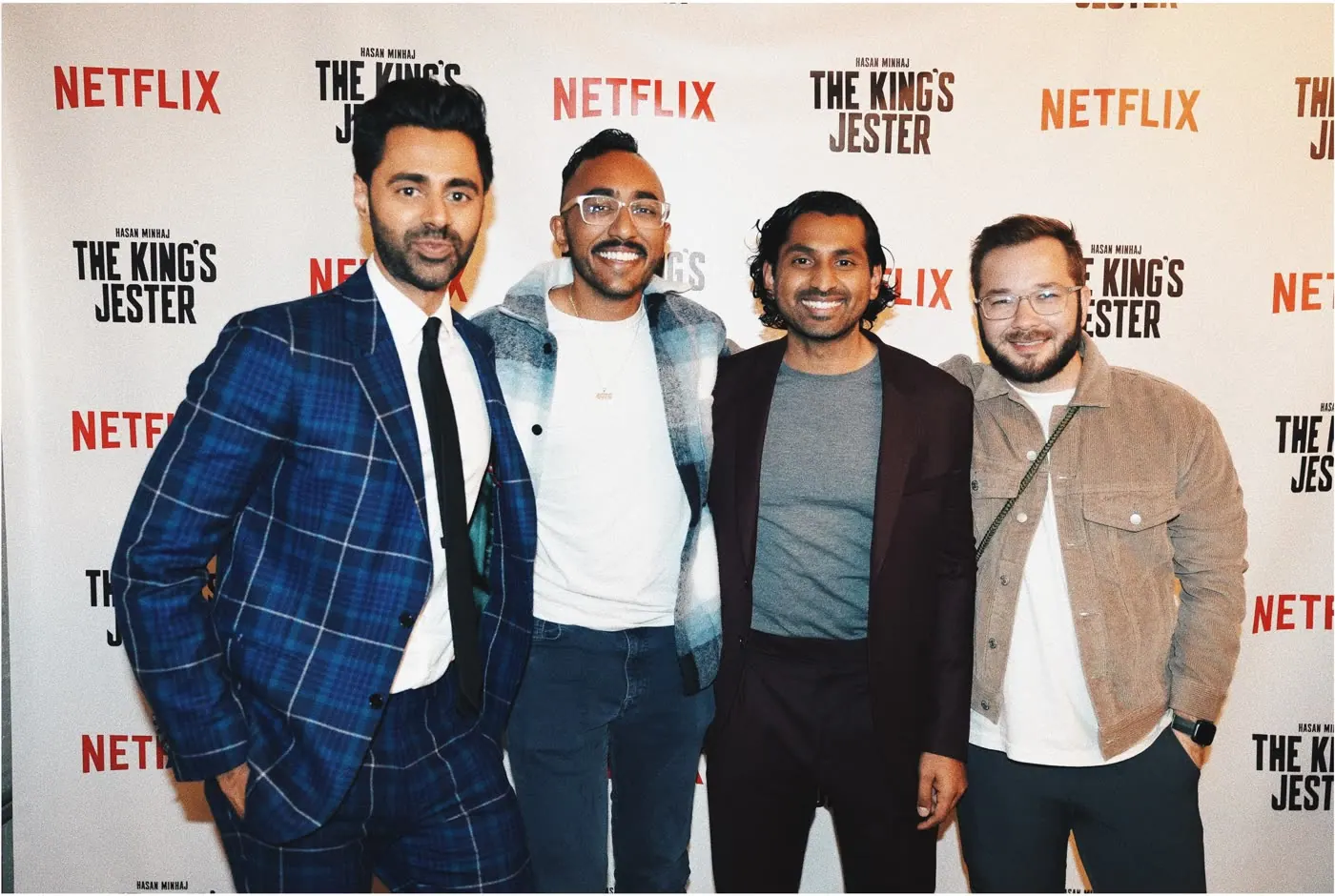
That one email turned into years of work together. We went on to build his tour websites and his e-commerce site, I was credited as a creative consultant on two of his Netflix specials (The King's Jester and Off With His Head), and I've gotten to go to a bunch of tour stops along the way. Some of my favorite memories and experiences have come from working with Hasan and his team, and he's still a client today.
Even the referrals
Not every dream client came from a cold email. Dr. Andrew Huberman, David Senra, and Rick Rubin all came to us through referrals (and I'm forever grateful for those introductions and that trust.) But I'd argue that even those trace back, at least indirectly, to projects like Chance and Hasan. By the time those intros happened, we had a real body of work with big names in the creator world that we could point to and talk about, and that credibility made it a lot easier for someone to trust us with their website.
The guide
This is the process I've used for years, and it's the same whether I'm reaching out to a comedian, a podcaster, or a company. More than 80% of the emails where I've built someone a website have turned into clients, and that number only holds because I send very few of them and put a ton of care into each one.
1. Write a dream clients list
Every year, in the last two weeks of December, 8020 shuts down for the holidays, and somewhere in there, I sit down and write my list of the people and companies I want to work with next year. I've kept some version of it since before I graduated college.
The list is the easy part, and anyone can write down names. The important thing is that every name on it is someone you actually care about, because the rest of this only works if the care is real.
2. Find the right email, and skip the agent
Start with the places people already share how to reach them, like their website, their podcast, or their press page. For artists and creators, the right person is often someone on their team, like a manager, rather than the person themselves. Just don't send it to their agent.
In my experience, the agent is almost never the right person for a cold email, even if you happen to pick the right one out of what's often a huge list of them. Agents are incentivized on financials. Plenty of the websites we build at 8020 are designed to drive revenue, but for celebrities, a lot of them are more about brand perception and great design, which is much harder to tie to a dollar amount (though it definitely helps!). That makes an agent a pretty bad proxy for deciding what's worth putting in front of the person they represent.
I've seen this firsthand. People have told me they pitched some of my active clients through their agents, and I got to see how those emails were answered. Admittedly, the pitches usually weren't great, so they probably wouldn't have landed with the client either, but the agent's reply asked all the wrong questions.
3. Make the thing before you ask
If you design or build websites, you have a real advantage here. A well-designed, well-built website is something of genuine value that you can make for someone pretty quickly, especially on Webflow, and then just hand to them. Someone on Twitter calls these "permissionless projects," and I love that term.
So I don't send emails asking if someone wants a new website. I build them the website first. It should be your best work, not a rough mockup. When my team laughed at the idea that I'd designed Hasan's site, that's the bar I was going for. Don't send bad work.
If you don't build websites, the same idea still applies. Make something they'd actually want, the way the Snapchat filters were for Chance.
4. Write a short email
My cold emails are short, and they pretty much always follow the same shape:
- A subject line that says exactly what's inside. Mine to Hasan was "I built you a new website :)"
- Who I am. "Hey, my name is Matt," plus one line on what I do.
- The work. "I built you a new website because I think yours could be a lot better. Here it is, no strings attached."
- One sentence of vision. What the site could do for them, with one concrete idea, like a better way to grow their email list.
- The ask, softly. "I'd love to work with you if you're open to it, but no pressure."
Put together, it looks something like this:
Subject: I built you a new website :)
Hey [name],
I'm Matt, and I design and build websites. I'll keep it brief — I built you a new website!
I think yours could be a lot better, so here's my take on it. One idea I love: [one concrete thing it could do for them].
If you like it, keep it — no strings attached. I'd love to find a way to work together eventually, if you're up for it, but no pressure.
5. Send it, and mean the no-strings part
If they took the site and never spoke to me again, I'd honestly just be proud that they used it. That's what makes it a very low-friction email to receive and a very high-value one, and even if someone never replies, they've learned something about their own site.
6. Watch what happens
I put basic visitor analytics on every site I send, filtered so my own visits don't count, which means I can see whether anyone actually opened the link. It won't tell you what they thought, but it'll tell you whether it landed in front of them.
I also always set the site to noindex, so search engines stay out of it, for two reasons. First, a site you built for someone should never show up in search results without their permission (it's extremely bad form.) Second, it keeps the traffic clean, so when someone does visit, you can be pretty sure it was them.
There are sometimes false positives, usually from overseas crawlers that ignore those rules, but they're generally easy to spot and filter out, especially with a little help from an LLM.
7. When they say "not right now"
Be gracious about it. Hasan's first reply was that he didn't have anything for me, and a week later he did. A not-right-now from someone who's seen your work is a very different thing from a no.
8. When they say yes
Think about what you actually want out of it. When Hasan offered to pay me for that first project, what I wanted more was to meet him, and that turned into years of working together. Once you're actually in a conversation, everything I wrote about relationship selling takes over from here.
What this isn't
This isn't Salesloft, and it isn't "Hi {first name}, I noticed your site is on WordPress" sent to sixty thousand people. It's one person, one email, and something you actually made for them.
And it doesn't always work. When I gave a talk at Webflow Conf, Ben Parker from Webflow and I cold emailed Jason Sudeikis as part of it. We could see that he opened it, and he never replied. That's part of it, too, and I'd still send it again.
You never know how it'll work out
I'll say this until I die, but send the cold email.
In 2016, I had a list of people I wanted to work with and no way in to any of them. The two biggest turns in my career both started with something I made for someone who never asked for it — Snapchat filters for Chance, and a website for Hasan. I didn't need permission or a network to do either one. I just needed to care enough to make the thing and send it.
If you're in the web space, I'd really, really encourage you to write your list and get after it. Pick the name that feels a little too big, build them something you're proud of, and send it with no strings attached. Worst case, someone you admire gets a free website out of it. Best case, it changes your life the way it changed mine.